
Diabetes & Diabetic Retinopathy
Thanks to the NHS Diabetic Eye Screening Programme and advances in diabetes care, blindness caused by diabetic retinopathy has fallen significantly over the past two decades. Even so, diabetic retinopathy remains one of the leading causes of preventable sight loss in adults, particularly when it isn't detected early.
A word from our optometrist: "One of the biggest challenges with diabetic retinopathy is that it often develops without causing any noticeable changes to your vision in the early stages. By the time your sight is affected, permanent damage may already have occurred. That's why regular diabetic eye screening is so important. Even if your vision seems perfectly normal, attending every screening appointment gives us the best chance of detecting problems early, when treatment is most effective."
Understanding the Disease
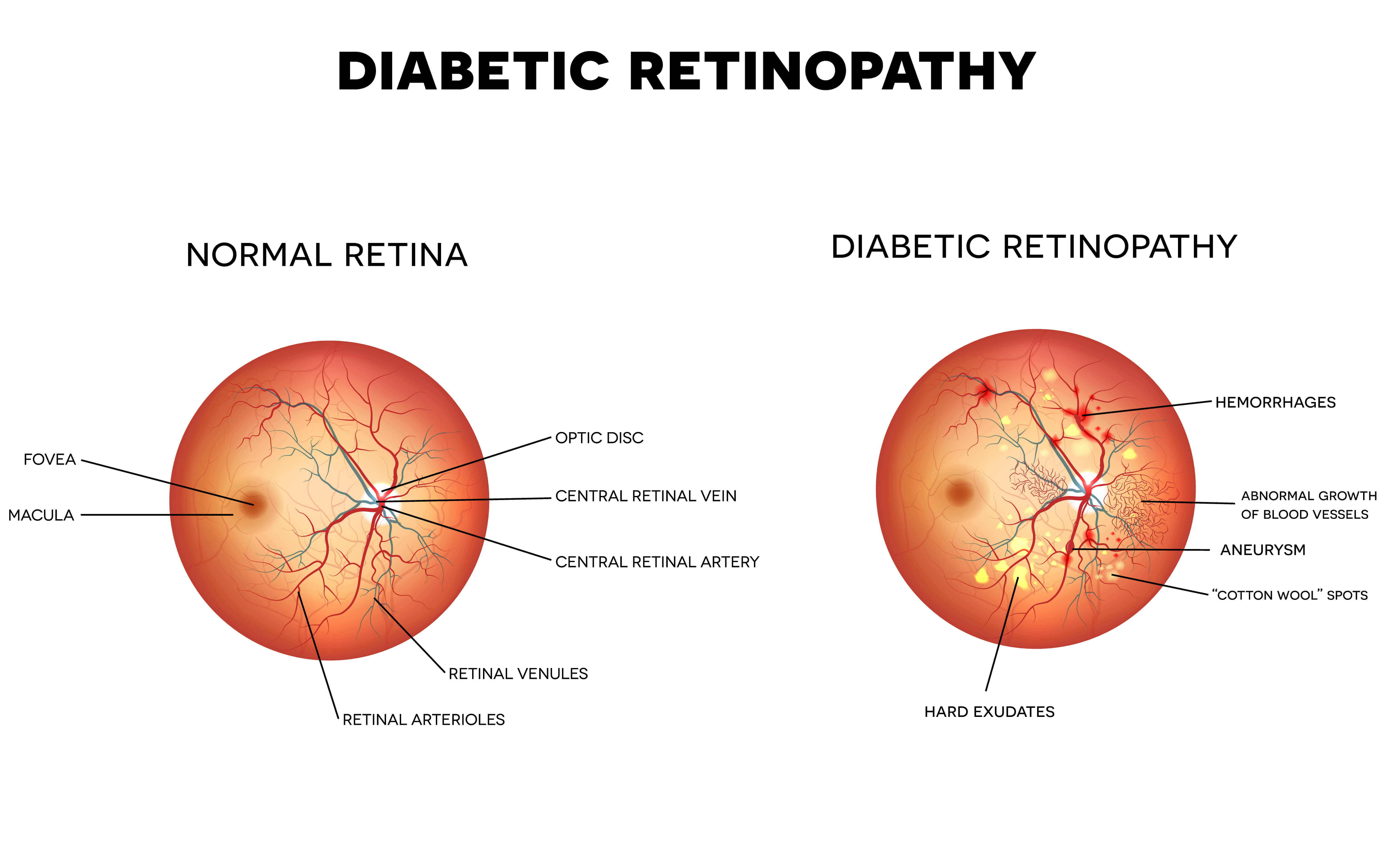
In the back of your eye is the retina. This sensitive tissue is responsible for gathering the light that passes through your cornea and relaying the information gathered to the optic nerve. Diabetics often experience issues with their circulation, which can cause the microscopic capillaries and blood vessels of the retina to bleed into the eye.
In the advanced stages of the disease, the blood vessels can grow out of control, blocking vision or even causing blindness. As over half of people with diabetic retinopathy are unaware they have it, early detection and prompt treatment can slow or prevent progression and dramatically reduce the risk of permanent sight loss. This disease affects people with all types of diabetes, including Type 1, Type 2, and gestational diabetes.
The Stages of Diabetic Retinopathy
The National Eye Institute breaks the stages of disease down into four distinct groups. Your optometrist or ophthalmologist will be able to advise you of where you fall within the stages.
- Mild nonproliferative. This is the first stage. Most people will have no idea the disease is present. Upon inspecting the retina with a special microscope (ophthalmoscope), your optometrist will note tiny bulges in the blood vessels of the retina. They may or may not be leaking fluid.
- Moderate nonproliferative. At this stage, the vessels that provide the retina with oxygen and nutrients may be twisted or distorted. They may begin to close off and narrow. This can also contribute to another diabetic eye disease known as Diabetic Macular Edema (DME).
- Severe nonproliferative. The blood vessels become clogged and cut off blood supply to parts of the retina. The tissue then ceases to function and dies. This causes the body to attempt to repair itself by growing new blood vessels, which will impede vision even more.
- Proliferative. At this end stage, the damage to the retina and its blood supply is severe. New vessels may grow around the retina and into the vitreous gel of your inner eye. These new structures are fragile and bleed easily, obscuring vision even more. In severe cases, this new growth can rip the retina from the back of the eye. This is called retinal detachment and will cause complete blindness in a matter of days if not surgically treated.
Prevention of Diabetic Eye Disease
There are plenty of steps you can take to lower your risk of developing diabetic retinopathy, even if you are already diabetic. Prevention of the disease hinges on three factors:
- Making good lifestyle choices
- Knowing and managing your vital numbers
- Having regular screenings
Lifestyle choices can do a lot to lower the risks of developing the disease as well as stop the progression of the disease if you've already been diagnosed.
Good control of diabetes remains one of the most effective ways of reducing the risk of diabetic eye disease. Keeping blood glucose, blood pressure and cholesterol within the target range recommended by your healthcare team all help protect the delicate blood vessels in the retina.
For many people with Type 2 diabetes, losing excess weight, eating a balanced diet, staying physically active and taking prescribed medication can dramatically reduce the risk of complications. Some people may even achieve remission of Type 2 diabetes through significant weight loss under medical supervision, but this is not possible for everyone and ongoing monitoring remains essential.
If you are currently overweight or obese, resolve to lose the extra pounds right away, by using the methods discussed - especially lose belly fat. There are many prescription medications on the market to help diabetics control their eating and their weight. Check out diabetes.org.uk for detailed information about what's available, and speak with your family doctor if you think they could help you.
If you smoke cigarettes, make a concerted effort to quit. Your doctor can help you with smoking cessation aids and programs. Get plenty of exercise that raises your heartbeat and gets your blood pumping. Hiking, bicycling and swimming are all excellent low-impact options. If you drink alcohol, limit yourself to no more than 14 units per week. Red wine is OK in moderation, as is dark chocolate. Avoid recreational drugs and risky behaviours that may compromise your overall health in any way.
Regular screening is also paramount. The sooner you are diagnosed and properly treated, the less of a foothold the disease will have on your retinas. You can be screened by your optometrist on a yearly basis, whether or not it's time to update your vision correction prescription. If you don't wear glasses or contact lenses, you will need to begin seeing an optometrist for a yearly checkup as soon as you are diagnosed with diabetes. All diabetics of every age must be screened, as retinopathy can develop in young people just as easily as in older people. Children with diabetes are monitored, buy the NHS Diabetic Eye Screening Programme, this should start shortly after diagnosis.
Treatment of Diabetic Retinopathy
If you are within the first three stages of the disease, the best treatment possible is careful management of your blood sugar levels. If your diabetes is well-controlled, your risk of developing diabetic retinopathy decreases dramatically. All of the same steps used to prevent retinopathy, such as healthy lifestyle choices and regular screenings, are also used to treat the disease in its earlier stages.
For those who have progressed to the proliferative stage of the disease, various treatment options are available to curtail the excess blood vessel growth. This can sometimes restore lost sight, provided the retina is still attached and is receiving a blood supply. Options include:
- Anti-VEGF Injections. Anti-VEGF medications are injected directly into the eye to block a protein called vascular endothelial growth factor (VEGF), which stimulates the growth of abnormal blood vessels and causes fluid leakage. These injections are now one of the main treatments for diabetic macular oedema and some forms of advanced diabetic retinopathy, helping to reduce swelling, slow disease progression and preserve vision. Regular injections may be needed to maintain their effectiveness.
- Steroid Injections. By injecting steroids in the vitreous gel inside the eye, the pressure can be reduced. This will help reduce inflammation and allow the blood vessels in the eye to heal.
- Laser Treatments. A laser can sometimes be used to treat the overgrowth of blood vessels obscuring the retina. Laser treatment aims to reduce further vision loss and preserve existing sight. In some cases vision may improve, but the main goal is to prevent further damage. Whether or not you qualify for laser treatments depends largely on the severity of the disease, with those in the first three stages usually being better candidates than those with advanced disease.
- Surgical Intervention. Surgery can be used to clear away blood that has leaked into the vitreous gel or is obscuring the retina. Surgery can also be used to remove scar tissue if laser treatment is unsuccessful or the retinopathy has advanced too far for it to be effective. Surgery is often the last resort after all other options have been exhausted.
If you are diabetic and are concerned about the possibility of diabetic retinopathy, or you have already been diagnosed, understanding the disease, prevention and treatments is integral to your health. Diabetic retinopathy usually responds well to treatment and changes in lifestyle, meaning you can control the progression and outcome.
If you have additional questions or are concerned you may be at risk, contact your optometrist, ophthalmologist, or general practitioner right away. Early detection is crucial to preserving the health of your eyes.