Silicone Hydrogel Contact Lenses explained
What Are Silicone Hydrogel Contact Lenses?
Silicone hydrogel contact lenses are soft contact lenses made from an advanced material that combines hydrogel with silicone. They were first introduced in the late 1990s and are now widely used in modern contact lenses.
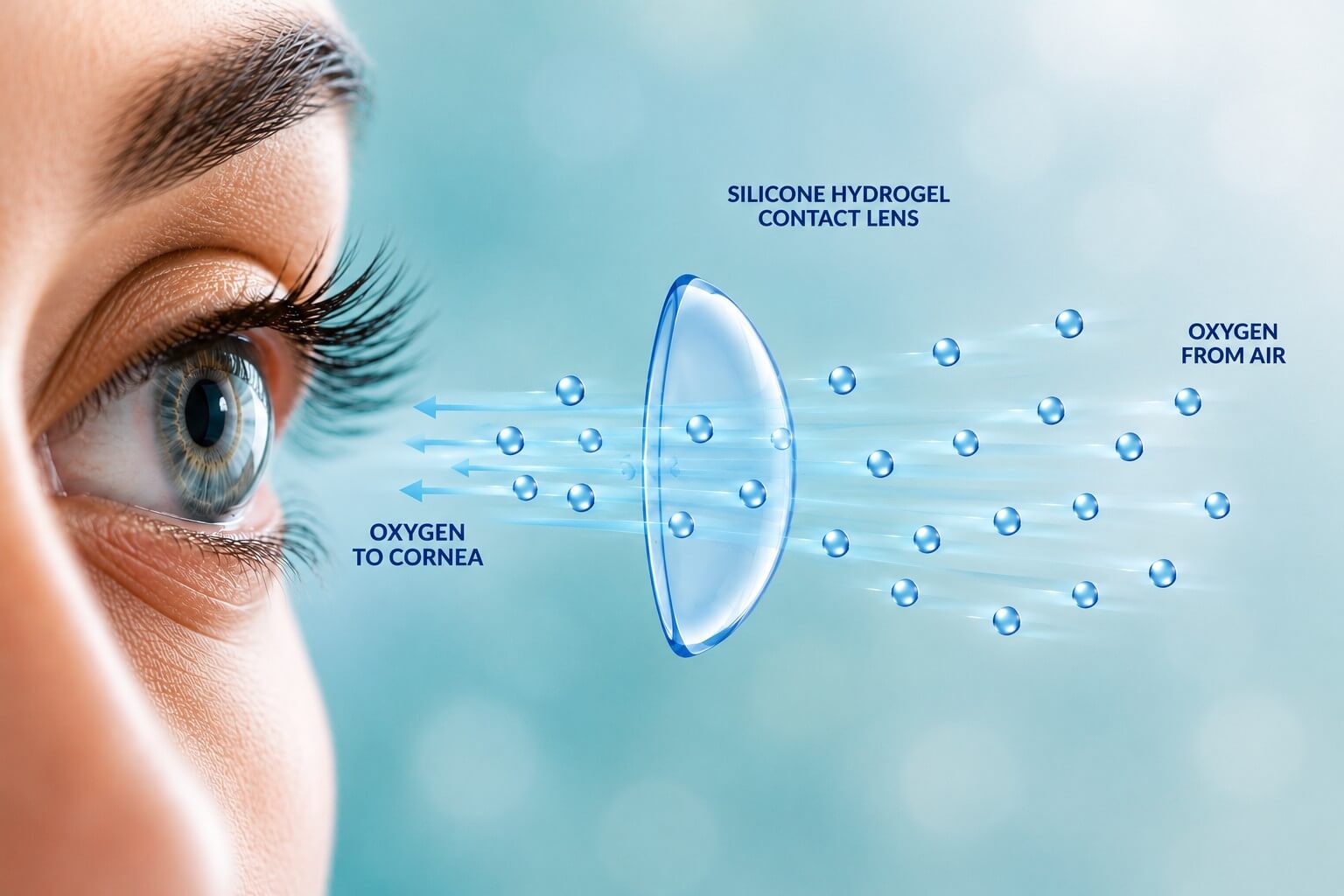
Traditional hydrogel lenses rely largely on the water within the lens to allow oxygen to pass through to the cornea. Adding silicone significantly increases the material's oxygen permeability, allowing much higher levels of oxygen to pass through the contact lens while it is being worn. This was an important development in contact lens technology because the cornea needs a regular supply of oxygen to remain healthy.
Today, silicone hydrogel materials are used in a wide variety of contact lenses, including daily disposables, two-weekly and monthly lenses, as well as lenses for astigmatism and presbyopia.
However, silicone hydrogel isn't automatically the best contact lens material for everyone. Oxygen transmission is only one part of choosing a contact lens — comfort, fit, tear film, prescription, and how you wear your lenses are also important.
Why Does Oxygen Matter When Wearing Contact Lenses?
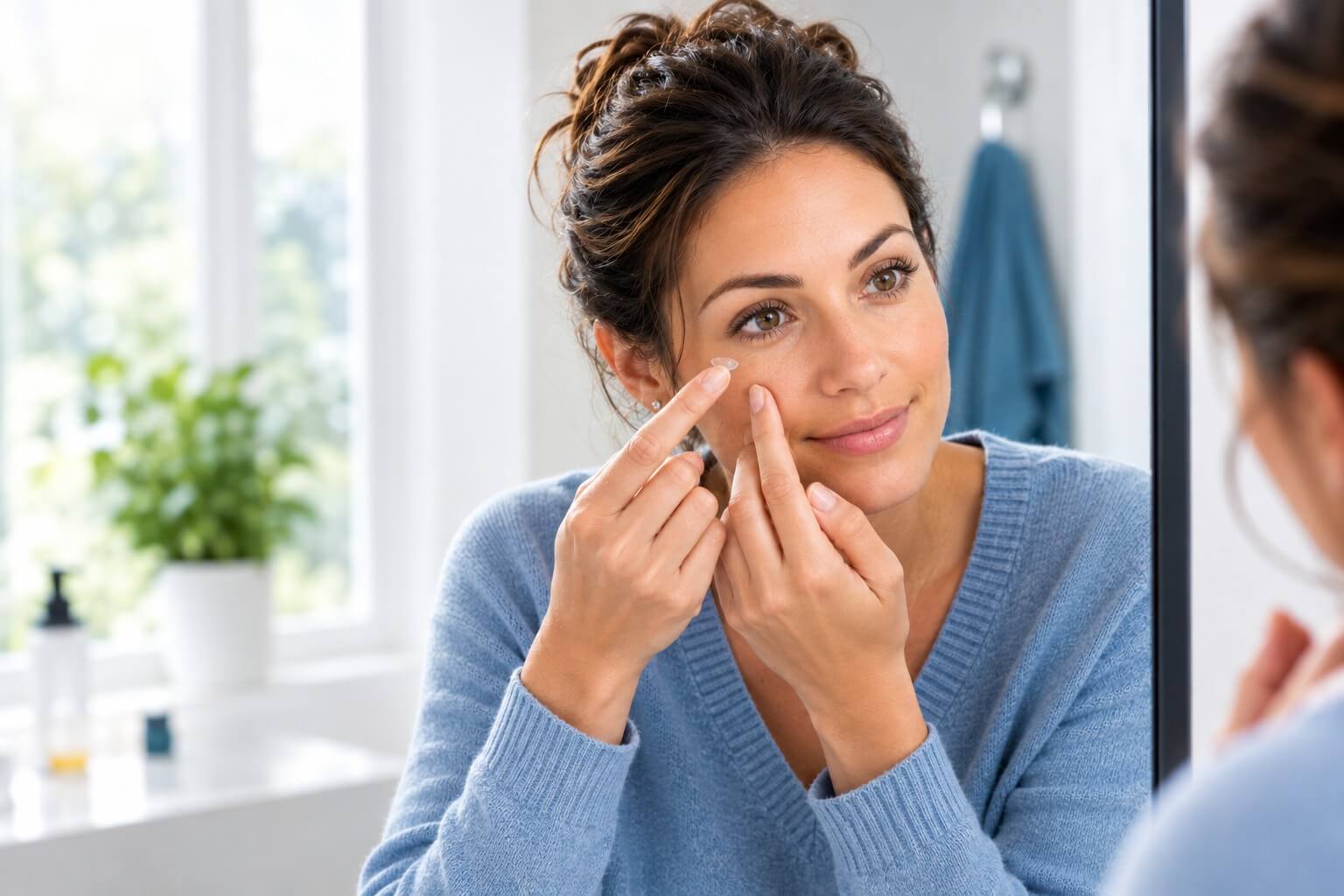
The cornea, the clear front surface of your eye, does not have its own blood supply. Instead, much of the oxygen it needs comes directly from the atmosphere through the tear film.
When you wear a contact lens, the lens sits between the cornea and the air, so oxygen needs to pass through the lens material to reach the cornea. If insufficient oxygen reaches the cornea, known as corneal hypoxia, it can lead to changes in the cornea and surrounding tissues.
One of the major advantages of silicone hydrogel is its high oxygen permeability. The silicone component allows considerably more oxygen to pass through the lens than traditional hydrogel materials, greatly reducing many of the problems historically associated with contact-lens-related hypoxia.
Good oxygen transmission is important for maintaining a healthy cornea, but it is only one part of successful contact lens wear. Lens fit, wearing time, hygiene and replacement schedule are also important.
Silicone Hydrogel vs Hydrogel: What's the Difference?
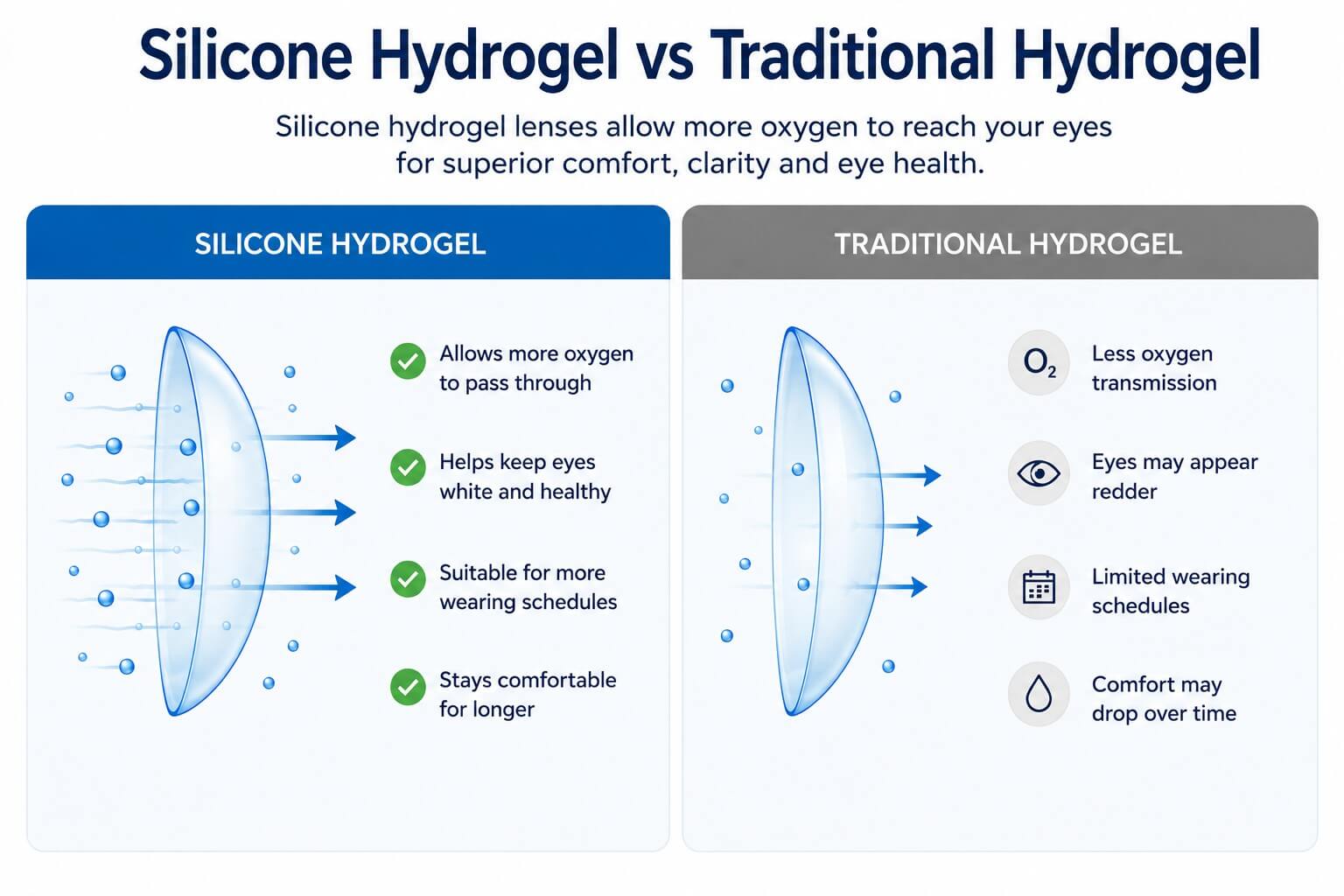
Both silicone hydrogel and traditional hydrogel lenses are soft contact lenses, but the materials transport oxygen differently.
Traditional hydrogel lenses rely largely on the water within the material to carry oxygen through the lens. Silicone hydrogel incorporates silicone, which is highly permeable to oxygen. This means silicone hydrogel lenses can provide high oxygen transmission without requiring a particularly high water content.
| Contact Lens | Replacement | Lens Type | Why We've Included It |
|---|---|---|---|
| Dailies Total1 | Daily | Spherical | Water-gradient silicone hydrogel daily lens |
| MyDay | Daily | Spherical | Everyday silicone hydrogel daily disposable |
| Biofinity | Monthly | Spherical | Popular reusable silicone hydrogel lens |
| Biofinity Toric | Monthly | Toric | Silicone hydrogel option for astigmatism |
| Air Optix Multifocal Plus HydraGlyde | Monthly | Multifocal | Silicone hydrogel option for presbyopia |
The Key Difference
The biggest proven advantage of silicone hydrogel is oxygen transmission — not necessarily comfort.
Although many people find silicone hydrogel lenses extremely comfortable, research hasn't established that silicone hydrogel is inherently more comfortable than hydrogel for everyone. Comfort also depends on factors including lens design, surface properties, replacement frequency, fit and the individual wearer's eyes.
What Are the Benefits of Silicone Hydrogel Contact Lenses?
Silicone hydrogel has become one of the most widely used materials in modern soft contact lenses, and its biggest advantage is the amount of oxygen it allows to reach the cornea.
High oxygen permeability
Silicone hydrogel allows significantly more oxygen to pass through the lens than traditional hydrogel materials, helping to minimise problems associated with insufficient oxygen reaching the cornea.
Suitable for longer daily wearing times
High oxygen transmission makes silicone hydrogel particularly useful when a contact lens needs to be worn for many hours during the day. However, you should still follow the wearing time recommended by your optometrist.
A wide choice of lenses
Silicone hydrogel is now available across a broad range of contact lenses, including daily disposable, two-weekly and monthly lenses, as well as toric lenses for astigmatism and multifocal lenses for presbyopia.
Suitable for a wide range of prescriptions
The material's high oxygen permeability gives manufacturers considerable flexibility when designing lenses, including lenses for more complex prescriptions.
Good handling characteristics
Many silicone hydrogel lenses are relatively easy to handle, which can be helpful when inserting and removing contact lenses.
Are There Any Disadvantages to Silicone Hydrogel Lenses?
Silicone hydrogel offers important advantages, but no contact lens material is perfect for everyone.
Some wearers may actually find a particular hydrogel lens more comfortable than a silicone hydrogel alternative. Comfort is influenced by much more than oxygen transmission, including the lens surface, design, fit and how it interacts with your tear film.
Silicone hydrogel lenses can also be more expensive than some traditional hydrogel lenses, although prices vary considerably between brands and replacement schedules.
Reusable silicone hydrogel lenses also require appropriate cleaning and care, just like other reusable soft lenses. The lens care system recommended for your particular lenses should always be used.
Most importantly, there is no need to change from a hydrogel lens simply because silicone hydrogel is a newer material. If your current lenses provide good vision and comfort, fit correctly and your optometrist is happy with your eye health, they may continue to be an excellent choice.
Are Silicone Hydrogel Contact Lenses Better for Dry Eyes?
Not necessarily.
It's easy to assume that because silicone hydrogel allows more oxygen to reach the cornea, it must also be better for dry eyes. Oxygen transmission and lens comfort are not the same thing.
Contact lens comfort can be affected by the stability of your tear film, the surface of the lens, lens design and fit, replacement schedule, environment and how long you wear your lenses. Research comparing silicone hydrogel with hydrogel lenses has not established that one material consistently provides better comfort for every wearer.
Modern silicone hydrogel lenses do, however, use a variety of surface technologies, wetting agents and material designs intended to help the lens remain comfortable throughout the day. Some people with dry-eye symptoms may therefore do very well in a particular silicone hydrogel lens — but the silicone hydrogel material alone doesn't guarantee this.
If your contact lenses regularly feel dry or uncomfortable, particularly towards the end of the day, speak to your optometrist. They can assess your tear film, lens fit and eye health and determine whether a different lens material, design or replacement schedule might help.
Which Contact Lenses Are Made From Silicone Hydrogel?
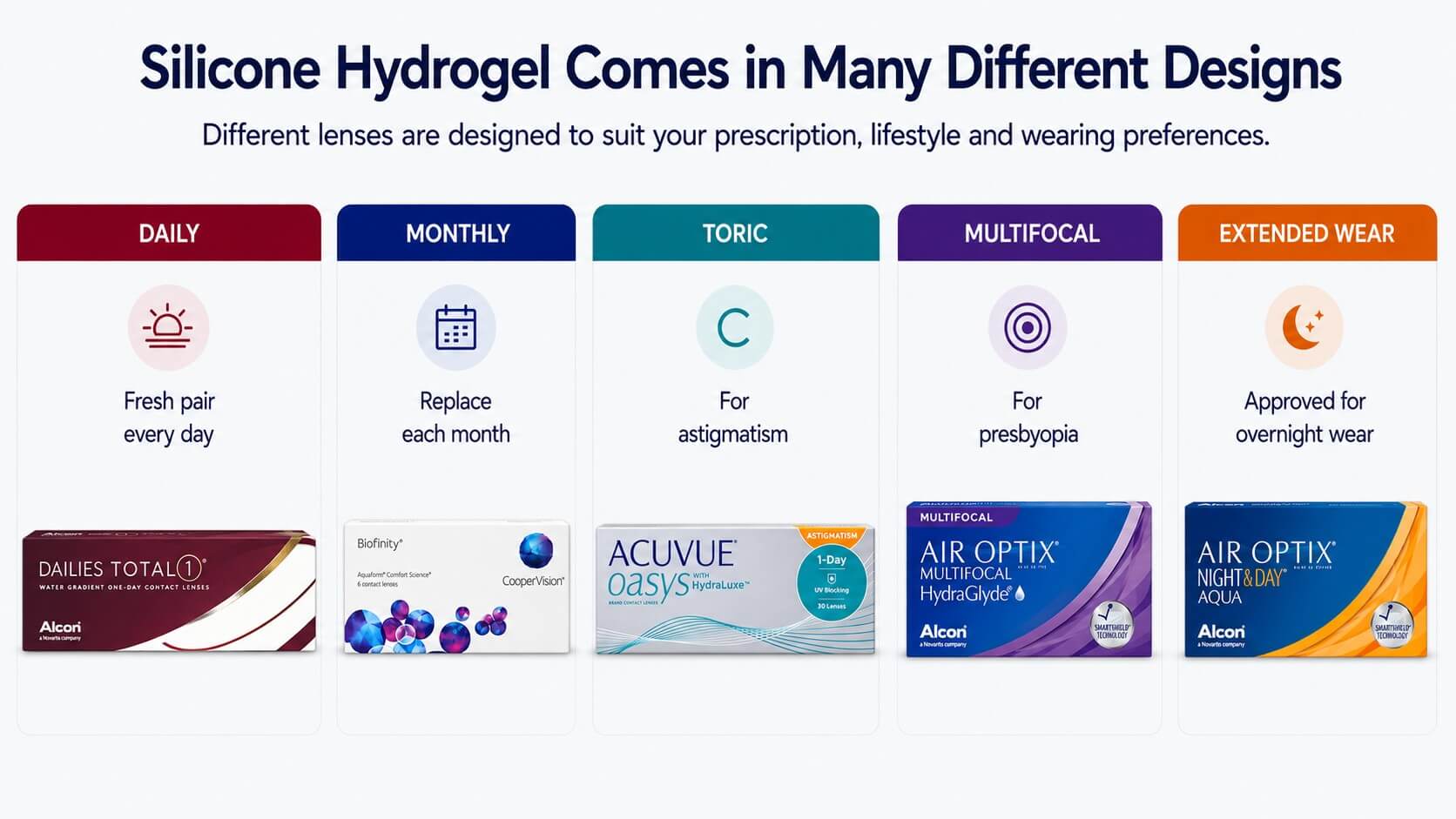
Silicone hydrogel is now used in a wide variety of soft contact lenses. You can find it in daily disposable and reusable lenses, as well as specialist designs for astigmatism and presbyopia.
Here are a few examples to show the different types available:
| Contact Lens | Replacement | Lens Type | Why We've Included It |
|---|---|---|---|
| Dailies Total1 | Daily | Spherical | Water-gradient silicone hydrogel daily lens |
| Biofinity | Monthly | Spherical | Popular monthly silicone hydrogel lens |
| ACUVUE OASYS 1-Day for Astigmatism with HydraLuxe | Daily | Toric | Daily silicone hydrogel option for astigmatism |
| Air Optix Multifocal Plus HydraGlyde | Monthly | Multifocal | Silicone hydrogel option for presbyopia |
| Air Optix Night & Day Aqua | Monthly | Extended Wear* | Silicone hydrogel lens approved for extended wear |
*Extended wear: Only sleep in contact lenses when the particular lens is approved for extended wear and your optometrist has recommended this wearing schedule for you.
Explore Silicone Hydrogel Contact Lenses
Silicone hydrogel lenses are available in a wide range of daily, reusable, toric and multifocal designs. Explore our complete range of silicone hydrogel contact lenses to compare the different options available.
Explore Silicone Hydrogel Contact Lenses
Daily or Monthly Silicone Hydrogel Contact Lenses?
Silicone hydrogel describes the material a contact lens is made from, not how often it needs to be replaced. Silicone hydrogel lenses are available as daily disposables, two-weekly and monthly lenses, so choosing the right replacement schedule is a separate decision.
Daily silicone hydrogel lenses are worn once and discarded at the end of the day. Each morning you start with a fresh pair, with no cleaning or storage required. They can be particularly convenient for occasional wear, travel or anyone who prefers a fresh lens each day.
Monthly silicone hydrogel lenses are reused for up to a month, according to the manufacturer's replacement schedule. They must be removed, cleaned, disinfected and stored correctly between uses and can offer a more economical option for regular lens wearers.
Neither is automatically the better choice. Your prescription, eye health, lifestyle, wearing habits, budget and how well a particular lens fits and performs on your eyes should all be considered when deciding which option is right for you.
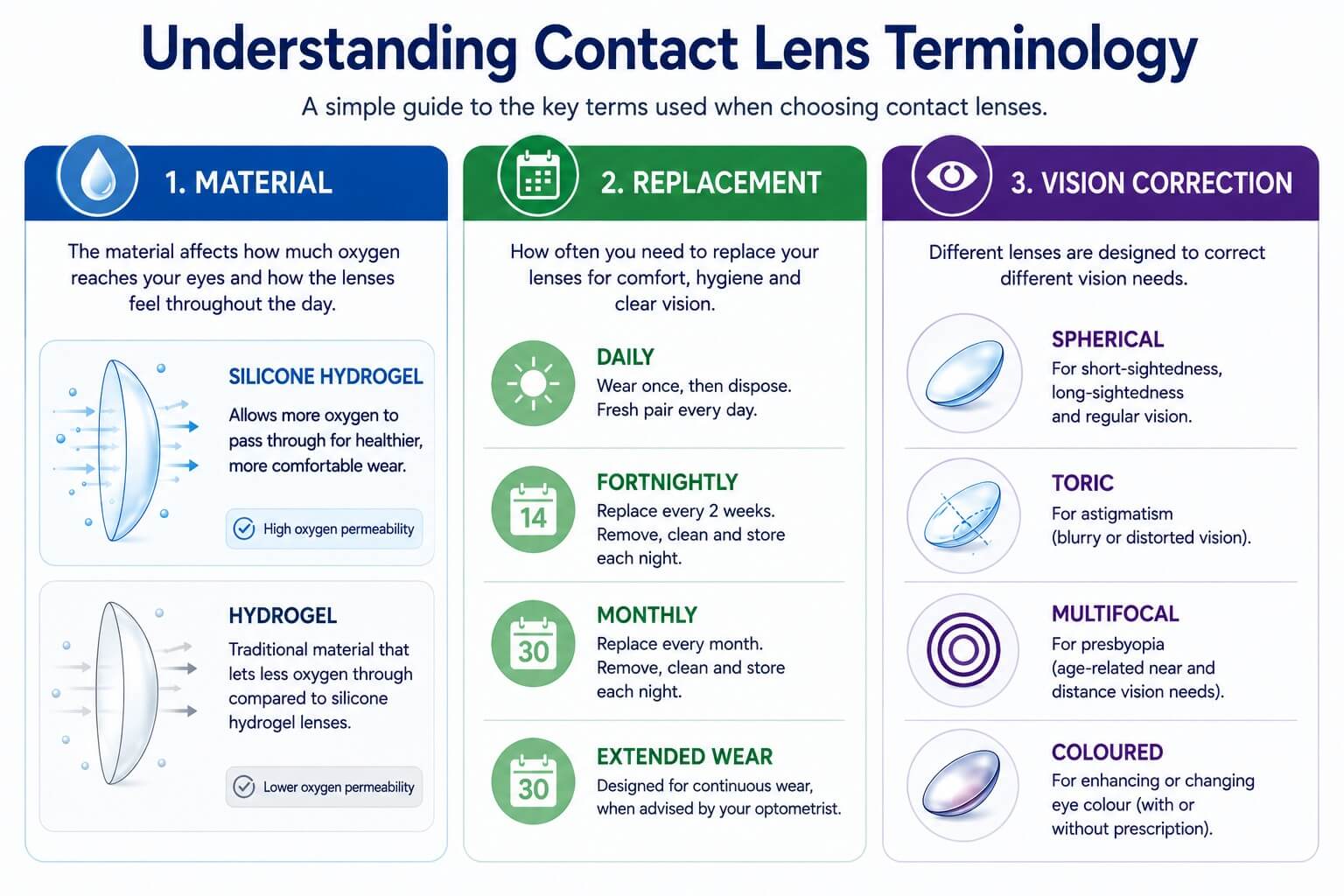
Remember: daily and monthly tell you when the lens is replaced; silicone hydrogel tells you what the lens is made from.
Who Might Benefit From Silicone Hydrogel Contact Lenses?
Silicone hydrogel lenses can be a good option for many contact lens wearers, particularly when high oxygen transmission is desirable.
They may be worth discussing with your optometrist if:
- You wear contact lenses for long periods during the day. High oxygen permeability allows more oxygen to reach the cornea while the lens is being worn.
- Your optometrist wants to increase the amount of oxygen reaching your cornea. Moving from a lower-oxygen lens material may help reduce signs associated with insufficient oxygen.
- You need a particular type of contact lens. Silicone hydrogel is available across a wide range of prescriptions, including spherical, toric and multifocal designs.
- You have a higher prescription. Lens thickness can affect the amount of oxygen reaching the cornea, so a highly oxygen-permeable material may be beneficial in some higher prescriptions.
- You would like a daily disposable silicone hydrogel lens. Modern silicone hydrogel materials are widely available in daily disposable designs, combining high oxygen transmission with the convenience of a fresh lens each day.
However, you don't need to fit into one of these groups to wear silicone hydrogel lenses, and being in one of them doesn't automatically mean silicone hydrogel will be the best choice.
Your optometrist can assess how a particular lens fits, how your eyes respond to it and whether its material and replacement schedule are appropriate for you.
Our Optometrist's Advice
“Silicone hydrogel has been an important development in contact lens materials because it allows much more oxygen to pass through the lens to the cornea. But oxygen transmission isn't the only thing I consider when fitting contact lenses.
A lens also needs to provide good vision, fit correctly, work well with your tear film and remain comfortable for the time you need to wear it. A newer or more oxygen-permeable material isn't automatically the best lens for every person — the best choice is the one that works well for your individual eyes.”
— John Dreyer BSc (Hons), DipCL, Optometrist
Frequently Asked Questions
Can You Sleep in Silicone Hydrogel Contact Lenses?
Some silicone hydrogel contact lenses are approved for extended or overnight wear, but this does not mean that all silicone hydrogel lenses are safe to sleep in.
Only sleep in contact lenses if the particular lenses have been approved for extended wear and your optometrist has specifically advised that you can wear them overnight. Sleeping in contact lenses increases the risk of complications, so your eye health and suitability for extended wear should be assessed and monitored.
Never assume that a lens is suitable for sleeping in simply because it is made from silicone hydrogel.
Are Silicone Hydrogel Contact Lenses More Comfortable?
They can be extremely comfortable, but silicone hydrogel lenses are not automatically more comfortable than hydrogel lenses.
Comfort depends on many factors, including the individual lens material and surface, lens design and fit, your tear film, replacement schedule and wearing habits.
If your current contact lenses are uncomfortable, your optometrist can help determine whether changing the material, lens design or replacement schedule might help.
Are Silicone Hydrogel Contact Lenses Better for Your Eyes?
Their major eye-health advantage is high oxygen permeability. Silicone hydrogel allows substantially more oxygen to pass through the contact lens than traditional hydrogel materials, helping to reduce problems associated with insufficient oxygen reaching the cornea.
However, higher oxygen transmission doesn't make a lens automatically “healthier” in every respect. Good contact lens wear also depends on appropriate fit, hygiene, replacement, wearing time and regular eye and contact lens checks.
Are Silicone Hydrogel Lenses Suitable for Astigmatism and Presbyopia?
Yes. Silicone hydrogel isn't limited to standard spherical contact lenses.
Toric silicone hydrogel lenses are available to correct astigmatism, while multifocal silicone hydrogel lenses can provide vision correction at different distances for people with presbyopia.
There are both daily and reusable options available, although the exact choice will depend on your prescription and the lenses suitable for your eyes.
Are Silicone Hydrogel Contact Lenses Worth the Extra Cost?
For some people, yes — particularly where the high oxygen transmission offered by silicone hydrogel is beneficial.
However, a more expensive or newer material isn't automatically a better contact lens for you. If you already wear hydrogel lenses comfortably, have good vision and your optometrist is happy with their fit and your eye health, there may be no reason to change simply because silicone hydrogel is available.
The best value comes from choosing a contact lens that suits your eyes, prescription and lifestyle rather than choosing on material or price alone.
Why Has My Optometrist Switched Me to Silicone Hydrogel Lenses?
Your optometrist may recommend switching to silicone hydrogel contact lenses because they allow more oxygen to pass through the lens to your cornea than traditional hydrogel materials.
They may have noticed signs that your eyes would benefit from greater oxygen transmission, or they may feel that a different lens material, design or replacement schedule would better suit your eye health, prescription or wearing habits. Silicone hydrogel can also be particularly useful when lenses need to be worn for longer periods during the day.
A change doesn't necessarily mean there was anything wrong with your previous contact lenses. Your eyes and wearing needs can change over time, and new contact lens options also become available. Your optometrist's recommendation will be based on what they see when examining your eyes and assessing how your lenses fit and perform.
If you're unsure why you've been switched, ask your optometrist — they should be able to explain the specific reason for recommending the new lenses.
The Bottom Line
Silicone hydrogel was an important development in soft contact lenses because it enabled much higher levels of oxygen to pass through the lens to the cornea. Today, the material is used across a wide range of daily, reusable, toric and multifocal contact lenses.
But higher oxygen transmission is only part of the story. Silicone hydrogel isn't automatically more comfortable or the best material for everyone, and a well-fitting hydrogel lens can still be an excellent choice.
Ultimately, the best contact lens is one that provides clear vision, good comfort, an appropriate fit and supports the health of your eyes.
Explore Silicone Hydrogel Contact Lenses
Want to see the different options available? Browse our complete range of silicone hydrogel contact lenses, including daily, monthly, toric and multifocal designs.